
- All
- Arbitration Law
- Auto Hidden
- Banking Law
- Capital Markets and Securities Law
- CBCL - LSPR Series
- Commercial Courts Act
- Commercial Law
- Company Law
- Competition Law
- Contemporary Issues
- Contract Law
- Corporate Governance
- Debt Recovery
- Dispute Resolution
- Employment Law
- Energy Laws
- Foreign Direct Investment Regulations
- Guest Posts
- Insolvency Law
- Intellectual Property Law
- Investment Law
- Mergers & Acquisitions
- Promotion
- Sports Law
- Taxation Law
- Technology Law
- Trade Law
- Back
- Kaizen

[By Arnav Maru] The author is a fourth year student of Maharashtra National Law University, Mumbai. Background Karvy Stock Broking Limited (“Karvy”), a registered stockbroker, recently found itself in the crosshairs of the Securities and Exchange Board of India (“SEBI”) for perpetrating one of the biggest cases of financial misconduct involving misuse of client securities. Karvy was founded in 1995 with its head office in Hyderabad and had...
[By Vatsal Patel] The author is a fourth year student of Institute of Law, Nirma University. Introduction The Insolvency and Bankruptcy Code, 2016 (“IBC”) has been a game-changer in the field of corporate bankruptcy in India. Though, there is still scepticism, looming over the IBC’s economic significance with a lot of companies going into liquidation as opposed to the intended corporate revival,[i] there is no doubt that the...

[By Anchit Jasuja and Preksha Mehndiratta] The authors are second year students of Gujarat National Law University, Gujarat. The sanction of a scheme or arrangement under the Companies Act, 2013 (“Act”) cannot be done without the sanction of the National Company Law Tribunal (“NCLT”) under its supervisory jurisdiction. However, if a shareholder or creditor has any grievance with respect to the scheme, he may approach the NCLT to...
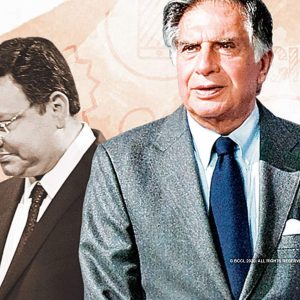
[By Prakhar Khandelwal] The author is a third year student of National Law Institute University, Bhopal. The National Company Law Appellate Tribunal’s (“NCLAT”) order dated 18 December 2019 (an appeal against which is pending before the Supreme Court) directed Tata Sons to reinstate Mr. Cyrus Pallonji Mistry as their Executive Chairman of the Board and as a director on the boards of Tata Sons and other group companies....

[By Mrudula Dixit] The author is a fourth year student of Symbiosis Law School, Pune. Introduction There are a few peculiar provisions in the Arbitration and Conciliation Act, 1996 (“Act”)[i] which stand out for instance Section 9 of the Act. Section 9 states that an interim measure can be granted by a court before, during or after making of the arbitral award at the instance of the party...

[By Muskan Arora] The author is a third year student of West Bengal National University of Juridical Sciences, Kolkata. On 8 May 2019, the Supreme Court (“SC” or “the Court”) rendered a decision in Ssangyong v. NHAI (“SsangYong”). In the instant case, the parties entered into a contract to build a highway in Madhya Pradesh. The dispute arose out of the application of a price-escalation clause, which NHAI...

[By Shantanu Lakhotia] The author is a student of Jindal Global Law School, Sonipat. Introduction Recently, a judgement delivered by a 3-judge bench of the Supreme Court of India has been hailed by the legal fraternity as it cleared a mischief revived by the Parliament in the realm of arbitration law. In the matter of Hindustan Construction Company Ltd. & Anr. v. Union of India & Ors.[i](“HCC case”),...

[By Darshana Paltanwale and Manasvini Vyas] The authors are fourth year students of Symbiosis Law School, Pune and National Law University, Odisha respectively. Introduction Over the years, mediation has garnered recognition and preference in India, as the Indian legislature and courts have been inclined towards the development of Alternative Dispute Resolution (“ADR”) mechanism in the country, in line with the international standards. It also stems from the fact...