
- All
- Arbitration Law
- Auto Hidden
- Banking Law
- Capital Markets and Securities Law
- CBCL - LSPR Series
- Commercial Courts Act
- Commercial Law
- Company Law
- Competition Law
- Contemporary Issues
- Contract Law
- Corporate Governance
- Debt Recovery
- Dispute Resolution
- Employment Law
- Energy Laws
- Foreign Direct Investment Regulations
- Guest Posts
- Insolvency Law
- Intellectual Property Law
- Investment Law
- Mergers & Acquisitions
- Promotion
- Sports Law
- Taxation Law
- Technology Law
- Trade Law
- Back
- Kaizen

[By Aditya Mehrotra] The author is a student of Symbiosis Law School, Pune. Abstract Insider trading is essentially the unlawful trading of stocks having access to non-public information that, if published, would alter the market price of shares. In light of prior rulings on insider trading, the Supreme Court and SAT have rejected the use of circumstantial evidence in identifying insider trading offences, however they have given...

[By Muskan Madhogaria, Lavanya Bhattacharya and Srishti Gupta] The authors are students of Jindal Global Law School. Introduction The Securities and Exchange Board of India (“SEBI”) recently by way of a Consultation Paper dated 21st February 2023, proposed mandatory disclosure requirements for listed entities by amending Regulation 30 of the LODR along with certain other shareholder approval mechanisms. This has prompted several suggestions for consideration, some of...

[By Saumya Mittal] The author is a student of Gujarat National Law University. Introduction The implementation of the Social Stock Exchange (“SSE”) in India exemplifies a point where socialism and capitalism intersect with the appropriate balance, providing a fitting illustration. Although in existence for more than two decades around the globe, SSE was mentioned for the first time in India in the Union Budget of 2019-20. The...

[By Chytanya S Agarwal] The author is a student of National Law School of India University, Bangalore. I. Introduction The rationale behind Reverse Mortgage Loans (‘RMLs’) is to ensure adequate retirement income for senior citizens, whose wealth is majorly confined in the form of home equity, . RMLs are essentially the ‘reverse’ of conventional mortgages and entail periodic payments from the mortgagee (and not the mortgagor) for...

[By Arghya Sen] The author is a student of Amity University. Introduction The intersection of intellectual property and antitrust law is an increasingly important issue in the tech industry. On the one hand, intellectual property protection can incentivize innovation and drive economic growth. On the other hand, antitrust law is designed to promote competition and prevent monopolies. When these two legal frameworks intersect, they can have a...
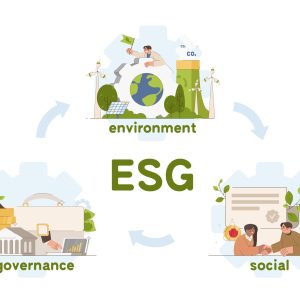
[By Basil Gupta] The author is a student of National Law University, Jodhpur. Introduction The idea of Corporate Social Responsibility (‘CSR’) was introduced to the Indian corporate world to include social and environmental issues in their business practices. Initially, CSR was a popular topic in corporate law and governance, but recently there has been a shift towards Environmental, Social, and Governance (ESG) factors. This change occurred as...

[ByHarsh Mittal] The author is a student of Hidayatullah National Law University. Introduction We see that recessionary fears have started impacting M&A deals and there has been a considerable slowdown in merger deals as a result of the same. There exists a huge gap between what private investors are willing to offer for different Merger deals now as compared to Pre- Recession period. The latest victim of...

[By Modit Mendiratta and Mahak Agarwal] The authors are students of Gujarat National Law University. Introduction The Securities and Exchange Board of India (SEBI) has recently proposed extending the trading hours for equity derivatives in India. The proposal has garnered mixed reactions from market participants and experts. Currently, the trading hours for equity derivatives on the National Stock Exchange (NSE) and the Bombay Stock Exchange (BSE) are...