
- All
- Arbitration Law
- Banking Law
- Capital Markets and Securities Law
- CBCL - LSPR Series
- Commercial Courts Act
- Commercial Law
- Company Law
- Competition Law
- Contemporary Issues
- Contract Law
- Corporate Governance
- Debt Recovery
- Employment Law
- Energy Laws
- Foreign Direct Investment Regulations
- Guest Posts
- Insolvency Law
- Intellectual Property Law
- Investment Law
- Mergers & Acquisitions
- Promotion
- Sports Law
- Taxation Law
- Technology Law
- Trade Law
- Uncategorized
- Back
- Kaizen

[Shagun Singhal] The author is a second year student of National Law Institute University, Bhopal and a member of CBCL. Background Recently in March 2020, the Union Cabinet approved certain amendments (“Companies Act Amendment, 2020” or “the Amendment”) put forth by the Injeti Srinivas Committee (“the Committee”) in November 2019 (“Srinivas Committee Report, November 2019”). The Srinivas Committee Report built upon another report that had been submitted by…
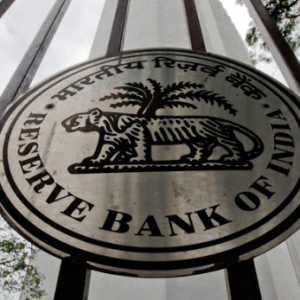
[By Ujjwal Jain] The author is a third year student of Tamil Nadu National Law University. One of the most important functions of any central bank is to formulate and execute monetary policy. In our case, the Reserve Bank of India (“RBI/Bank”), the banking regulator and India’s central bank, is statutorily entrusted with this responsibility.[i] Monetary policy refers to the policy of the central bank with regard to…

[By Shivam Tripathi] The author is a fourth year student of Maharashtra National Law University, Nagpur. The global payments landscape is under fundamental transformation and India is no exception to this. The Reserve Bank of India (“RBI”) notified the 2020 guidelines[i] governing Payment Aggregators (“PA”) and Payment Gateways (“PG”) (“Guidelines”). PA is a service provider through which merchants can process their payment transactions, and PG provides the technical support for…

[By Gaurav Pingle] The author is a practicing Company Secretary. Corporate governance has always emphasized on building an environment of trust, transparency, and accountability necessary for fostering long-term investment, financial stability, and business integrity. This in turn contributes to supporting stronger growth and more inclusive participation of stakeholders, required especially when the global economy is badly hit due to the COVID-19 pandemic. From the perspective of accountability and…

[By Lavanya Jha and Shreya Jha] The authors are students of WBNUJS, Kolkata and Amity Law School, Delhi respectively. Introduction The growth in anti-competitive concerns due to the rapidly evolving business landscape in India, has led to amendments being proposed in the Competition Act, 2002 (“Act”) by the Ministry of Corporate Affairs. One of such proposed amendments includes the expansion of the scope of cartels. Earlier, under the…

[By Sumit Jain] The author is a Senior Resident Fellow at the Centre for Competition Law and Economics. Introduction The Competition Act, 2002 (“Act”) was introduced in order to keep pace with economic reforms and pay due focus on sectoral expertise in the country. One such industry which has gained prominence since the Competition Commission of India’s (“the Commission” or “CCI”) inception, is the Indian sports industry. The…

[By Kartikey Sahai] The author is a fifth year student of Institute of Law, Nirma University. Introduction India and China, two of the top 10 economic superpowers of the world have, in a way, put to terms, their political debacle with India blowing a major cog in the wheel of China’s upper handedness, by putting restrictions on Chinese investment in India. On April 17, 2020, the Department for…

[By Animesh Khandelwal and Surbhi Kapur] Both the authors are lawyers based in New Delhi. Introduction Pandemics have a potential to be very disruptive, entail a catastrophic effect with a staggering cost on one and all. With Covid-19 being declared as a pandemic, the global community is left helplessly supine with irreparable loss to the lives of the people. All the sectors of the Indian economy have suffered…