
- All
- Arbitration Law
- Banking Law
- Capital Markets and Securities Law
- CBCL - LSPR Series
- Commercial Courts Act
- Commercial Law
- Company Law
- Competition Law
- Contemporary Issues
- Contract Law
- Corporate Governance
- Debt Recovery
- Employment Law
- Energy Laws
- Foreign Direct Investment Regulations
- Guest Posts
- Insolvency Law
- Intellectual Property Law
- Investment Law
- Mergers & Acquisitions
- Promotion
- Sports Law
- Taxation Law
- Technology Law
- Trade Law
- Uncategorized
- Back
- Kaizen

[By Ritik Khatri and Aanand Sanctis] The authors are students at National Law University Odisha. Prefatory The Insolvency system in India has made considerable progress since its inception; it has been continually tried and has grown altogether over due course of time. Due to this pandemic, the Indian Economy has endured a severe effect and will eventually prompt its phenomenal breakdown. As indicated by IMF, this worldwide pandemic…

[By Shubham Nahata] The author is a student at Hidayatullah National Law University, Raipur Introduction One of the most drastic and disastrous impacts of the economic slowdown induced on account of COVID-19 will be seen on the balance sheets(“B/S”) of banking and financial institutions. As the availability of easy credit will become the norm in the post COVID-19 society, banking institutions will need to deal with the…

[By Preksha Mehndiratta and Anchit Jasuja] The authors are students at the Gujarat National Law University, Gandhinagar. Background The Insolvency and Bankruptcy Code (Amendment Act), 2019 [i] had amended Section 31 of the Insolvency and Bankruptcy Code, 2016 (“IBC”) after many cases had surfaced where governmental authorities had demanded statutory dues from the corporate debtor even after the resolution plan had been approved. Recently, a division bench of…

[By Srishti Suresh] The author is a third-year student at NALSAR University of Law, Hyderabad. Background In light of the COVID-19 outbreak and its resultant economic lockdown, several companies are cash starved and are facing immense financial crunch. There exists an incumbent need to infuse funds into such stressed entities, to enable them to avoid insolvency and bankruptcy proceedings. Consequently, the securities market regulator SEBI, issued a Consultation Paper…
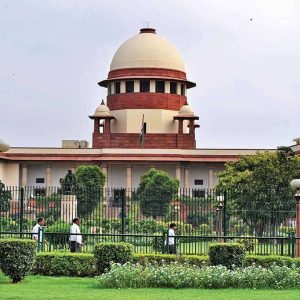
[By Shreya Choudhary] The author is a fifth-year student of ILS Law College, Pune. Introduction Section 48(2)(b) of the Arbitration and Conciliation Act, 1997 (“the Act”) provides that the enforcement of a foreign award may be refused if it is against the public policy of India. In the wake of various decisions of the Supreme Court and the High Courts, it is observed that the scope of interference…

[Parth Tyagi and Achyutam S. Bhatnagar] The authors are third year students of the National Law Institute University, Bhopal and National Law University, Odisha respectively. Introduction In the month of April, social media giant Facebook invested over 40,000 crores, for a 9.9% stake in Jio Platforms, a unit of Reliance Industries[i]. The transaction brewed up the concerns for the possible abuse of data at the hand of these…

[By Ananya HS] The author is a third year student of the National Law School of India University, Bangalore. Background A significant proportion of Indian businesses are fundamentally structured as group enterprises operating as a single economic unit. These enterprises commonly engage in related party transactions in the nature of cross-collateralization, inter-corporate loans, and so on. These enterprises largely adhere to the concept of separate legal personality of…

[Deepti Pandey and Sushant Singh] The authors are fourth year students of WBNUJS, Kolkata. Introduction The global increase in the foothold of the online platforms has considerably accelerated leading to a significant share in the relevant market.[i] The areas where these businesses have flourished in India include food delivery services, hotel and travel bookings, cab services and delivery of products through e-retail inter alia.[ii] On one hand, it…