
- All
- Arbitration Law
- Auto Hidden
- Banking Law
- Capital Markets and Securities Law
- CBCL - LSPR Series
- Commercial Courts Act
- Commercial Law
- Company Law
- Competition Law
- Contemporary Issues
- Contract Law
- Corporate Governance
- Debt Recovery
- Dispute Resolution
- Employment Law
- Energy Laws
- Foreign Direct Investment Regulations
- Guest Posts
- Insolvency Law
- Intellectual Property Law
- Investment Law
- Mergers & Acquisitions
- Promotion
- Sports Law
- Taxation Law
- Technology Law
- Trade Law
- Back
- Kaizen

[By Hemang Arora & Ayush Pratap Singh] The authors are students of Gujarat National Law University. Abstract On 21 July, 2022, SEBI issued a consultation paper proposing to bring online bond trading platforms under its regulatory purview. The SEBI raised concerns in the paper regarding the lack of regulation surrounding these online bond trading platforms and therefore provided recommendations to address the same. SEBI thus recommended mandatory registration requirements,...
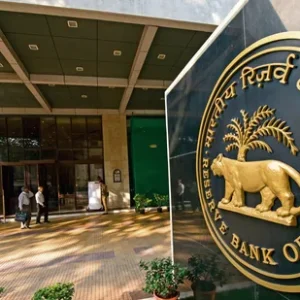
[By Aarya Parihar] The author is a student of Dr. Ram Manohar Lohiya National Law University. Account Aggregator Framework Have you ever wondered about consolidating all your financial data in one place? This is exactly the function the newly announced Account Aggregator Framework by Reserve Bank India (“RBI”)will carry out. This framework will put all your financial data in one place, that can be accessed by Financial Information...

[By Biprojeet Talapatra] The author is a student of Campus Law Centre, University of Delhi. Introduction Economic stability and prosperity in India require an effective insolvency resolution framework. With the enactment of the Insolvency and Bankruptcy Code (IBC) in 2016, India took a significant step in this direction. IBC was the first comprehensive law in India which addressed the insolvency of Corporate Persons and individuals. However, a law must...

[By Anshika Gubrele & Harsh Khanchandani] The authors are students of Bharati Vidyapeeth New Law College, Pune and Symbiosis Law School, Pune. Introduction Financial considerations have typically dictated investment choices. With the worldwide pandemic, climate change, ongoing depletion of natural resources, and many instances of fraud and scams, investors have become more aware of how environmental, social, and governance (“ESG”) factors of a commercial entity may affect its...

[By Mainak Mukherjee] The author is a student of National Law University and Judicial Academy, Assam. Introduction Delegated legislation acts as a tool for the legislature to reduce the burden from its shoulder. However, considering the thin line that separates delegated legislation from excessive delegation of power, it is pertinent for the legislature to exercise more control over the executive even when legislative powers have been delegated. Moreover,...

[By Saima Khan] The author is a student of Dr. Ram Manohar Lohiya National Law University, Lucknow. Introduction: During the Covid-19 pandemic, the Indian Stock Market witnessed a massive rise in the number of retail investors with remarkable participation from millennials and Gen-Z. According to the National Stock Exchange, retail shareholding in Indian companies reached a 15-year high in June 2022. This is indeed good news for our...

[By Satwik Mohapatra] The author is a student of National Law University, Odisha. The National Company Law Appellate Tribunal (NCLAT), in Kalinga Allied Industries India v. CoC of Bindals Sponnge Industries Limited (Kalinga Judgment), set aside the order of the National Company Law Tribunal (NCLT). The Tribunal ruled that the Committee of Creditors (CoC) cannot consider the new Resolution Plan outside the scope of Corporate Insolvency Resolution Process...

[By Praveen Sharma & Sakshi Nalawade] The authors are students of Maharashtra National Law University, Mumbai. On 8th July 2022, the Securities Exchange Board of India (SEBI) released a consultation paper seeking the opinion & comments of the public on its desire to extend the scope of SEBI Prohibition of Insider Trading (PIT Regulations), 2015 to include the dealings in the units of mutual funds. It is vital...